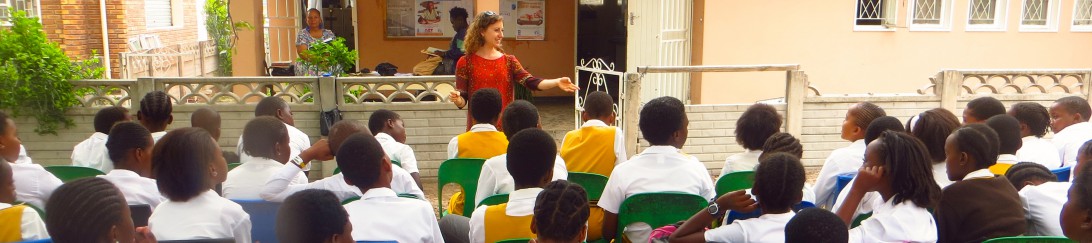
Nothing says “Welcome home from the Peace Corps” quite like a presidential election cycle packed with rhetoric dripping with caustic religious bias. But when I returned from the United States late last year, that is exactly what met me on American soil.
While living abroad in Botswana, I had watched the anti-Islamic vitriol swell in news stories and anecdotes from friends and family. I was worried, but not frustrated. Upon my return to the United States, concern became disappointment. From social media posts referring to Muslim-Americans as “rag heads” who need to “go back where they come from” to presidential debates where candidates eagerly conflated complex insurgencies with the Islamic faith, I felt an acute despair over the seeming divergence we were making from our foundation as a liberal democracy that championed religious freedom and diversity.
To assuage my despair, I partnered with my former high school teacher Larry Marcial to lead classes on interfaith peacebuilding at my alma mater, Delaware Valley High School. Using an exceptional United States Institute of Peace documentary about the Inter-Faith Mediation Centre in Nigeria’s Middle Belt, we co-facilitated discussions around faith, fear, and the necessity of embracing diversity. Some students responded with stark statements about the Other: “These people aren’t like us.” At one point, I was horrified to hear a student remark that naturalized refugees from West Africa should be sent back to their countries of origin, in spite of their American citizenship.
Yet, other students responded with an outstretched hand: “We are all the same. We are all human beings. We need to get along.” During a case study activity on African conflict issues, these students went further to draw parallels between conflicts seen in South Africa and conflicts in the United States. Conversations on racism, homophobia, xenophobia, and gender-based violence evoked immediate concern and empathetic understanding in these students.
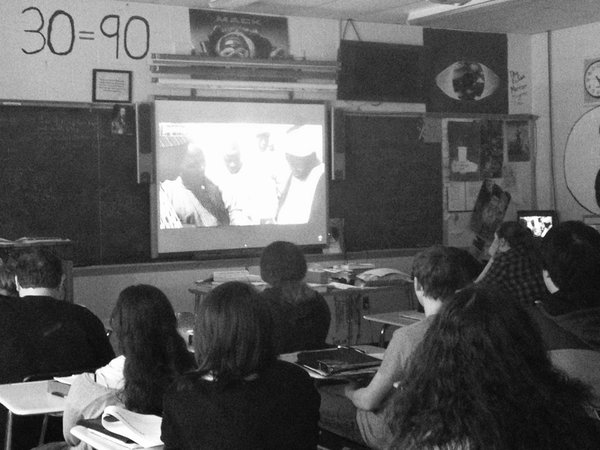
At the end of the three-day presentation, even the youth who initially seemed skeptical about the message of interfaith understanding had opened their minds to other pathways of co-existence. One student, expressive in his original attempts to make fun of the presentation, excitedly shared developed an innovative solution to interreligious violence in the Central African Republic: conduct a “church tour” whereby each week, the community attends a different worship center in order to understand different religions.
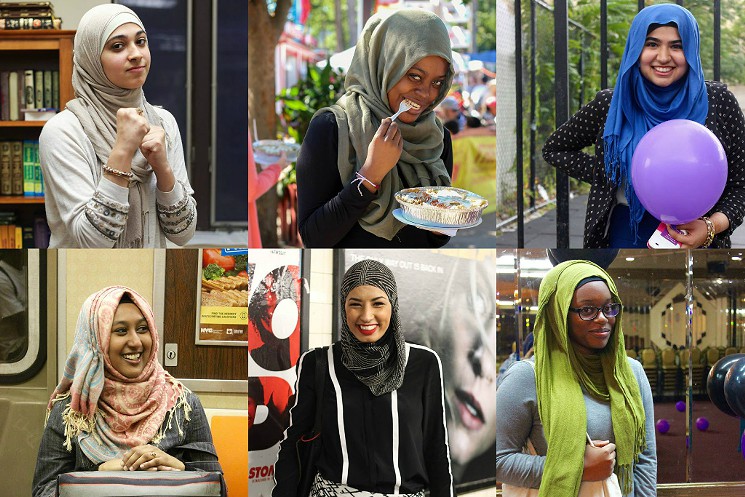
Mr. Marcial and I are not alone: many other Americans are making the effort to dispel stereotypes, inspire dialogue, and break down interreligious barriers. In Wisconsin, Scott McNorton started a “selfies with Muslims” campaign to increase the visibility of Muslim-Americans and to inspire playful partnership. Over in Queens, New York, Rana Abdelhamid started a “Hijabis of New York” initiative to showcase the beautiful diversity of American women wearing the hijab. Earlier this week, President Barak Obama visited the Central Mosque in Baltimore, offering a rebuttal of anti-Islamic election rhetoric and encouraging Americans to embrace each other regardless of religion.
For Americans, overcoming fear of other religions is crucial to reducing violent conflict. Divisive vitriol and a steadfast refusal to understand other faiths creates an image of the United States that bolsters support for faith-oriented violent extremism. We can all take steps to enhance our religious literacy and cultivate compassion for all human beings. Whether you embark on your own “church tour” or you research articles on the internet, breaking down barriers of faith will help build a more peaceful world.
 Daniella Montemarano