Election-Season Interfaith Peacebuilding

Nothing says “Welcome home from the Peace Corps” quite like a presidential election cycle packed with rhetoric dripping with caustic religious bias. But when I returned from the United States late last year, that is exactly what met me on American soil.

While living abroad in Botswana, I had watched the anti-Islamic vitriol swell in news stories and anecdotes from friends and family. I was worried, but not frustrated. Upon my return to the United States, concern became disappointment. From social media posts referring to Muslim-Americans as “rag heads” who need to “go back where they come from” to presidential debates where candidates eagerly conflated complex insurgencies with the Islamic faith, I felt an acute despair over the seeming divergence we were making from our foundation as a liberal democracy that championed religious freedom and diversity.

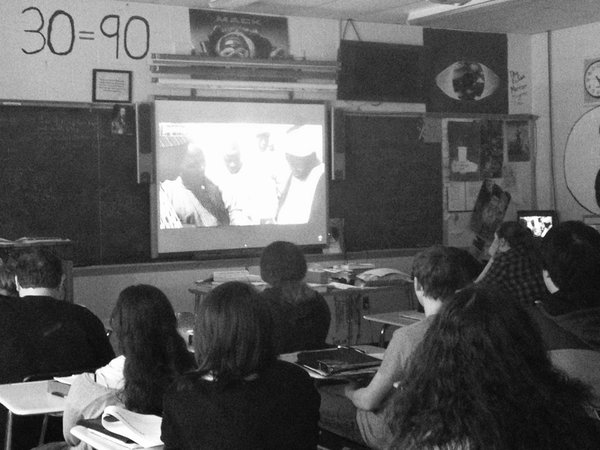
To assuage my despair, I partnered with my former high school teacher Larry Marcial to lead classes on interfaith peacebuilding at my alma mater, Delaware Valley High School. Using an exceptional United States Institute of Peace documentary about the Inter-Faith Mediation Centre in Nigeria’s Middle Belt, we co-facilitated discussions around faith, fear, and the necessity of embracing diversity. Some students responded with stark statements about the Other: “These people aren’t like us.” At one point, I was horrified to hear a student remark that naturalized refugees from West Africa should be sent back to their countries of origin, in spite of their American citizenship.

Yet, other students responded with an outstretched hand: “We are all the same. We are all human beings. We need to get along.” During a case study activity on African conflict issues, these students went further to draw parallels between conflicts seen in South Africa and conflicts in the United States. Conversations on racism, homophobia, xenophobia, and gender-based violence evoked immediate concern and empathetic understanding in these students.

CVE milford
Screening “The Imam and the Pastor” at Delaware Valley High School

At the end of the three-day presentation, even the youth who initially seemed skeptical about the message of interfaith understanding had opened their minds to other pathways of co-existence. One student, expressive in his original attempts to make fun of the presentation, excitedly shared developed an innovative solution to interreligious violence in the Central African Republic: conduct a “church tour” whereby each week, the community attends a different worship center in order to understand different religions.

Mr. Marcial and I are not alone: many other Americans are making the effort to dispel stereotypes, inspire dialogue, and break down interreligious barriers. In Wisconsin, Scott McNorton started a “selfies with Muslims” campaign to increase the visibility of Muslim-Americans and to inspire playful partnership. Over in Queens, New York, Rana Abdelhamid started a “Hijabis of New York” initiative to showcase the beautiful diversity of American women wearing the hijab. Earlier this week, President Barak Obama visited the Central Mosque in Baltimore, offering a rebuttal of anti-Islamic election rhetoric and encouraging Americans to embrace each other regardless of religion.

hijabs
Rana Abdelhamid’s “Hijabis of New York” campaign (Source:Facebook)

For Americans, overcoming fear of other religions is crucial to reducing violent conflict. Divisive vitriol and a steadfast refusal to understand other faiths creates an image of the United States that bolsters support for faith-oriented violent extremism. We can all take steps to enhance our religious literacy and cultivate compassion for all human beings. Whether you embark on your own “church tour” or you research articles on the internet, breaking down barriers of faith will help build a more peaceful world.

How to be a Holiday Peacebuilder

Sometimes as peacebuilders, we are so caught up with external conflict–Syria, Central African Republic, Burundi–that we get blindsided by familial interpersonal disputes that erupt over the holiday season. Sibling rivalries, memories of childhood trauma, growing pains with younger family members…somehow, they all coalesce into a very happy holiday.

So what’s a professional peacebuilder to do in the midst of family conflict? Here are some suggestions…

Avoid Escalations– Preventative diplomacy isn’t just for hindering the escalation of violent conflict. Using some humor can break up a tense discussion. Making space for new forms of interaction between family members can also prevent disputes, whether it’s watching a neutral movie or going for a walk. This also applies to you: self-care goes a long way in maintaining your sanity.

Give and Receive– We usually think of giving and receiving in terms of a wrapped present. But building peace over the holiday season is more than what’s on your shopping list. Small acts of service, demonstrations of humility, compassionate attention to the needs of others: not only do these actions recreate and refresh the atmosphere at home, but they also help ease emotional stress for individual family members.

Love is a two-way street, but receiving is a harder task for many people. Finding the courage to open your arms and accept support is a challenging and humbling act. In the midst of intrafamily conflict, turning to others for advice and empathy not only eases your own stress, but it opens the door for greater compassion and understanding.

View Reactions as Coping Mechanisms– When faced with upheaval in my family, one of my brothers reacts by trying to control the actions of those around him. For a while, I got frustrated and indignant at his aggression. But recently, I remembered how easy it is to conflate reaction to conflict with the conflict itself.

Reactions to conflict generally fall into five categories: confronting (I win, you lose); accommodating (I lose, you win); avoiding (we both lose); compromising (we both win); and problem solving (we get to the root of the disagreement and solve it). While it’s not usually advisable to jump in as a mediator in a family conflict (after all, you’re not really a “third party”), staying mindful of how relatives react to conflict can help you wade past the surface-level reactions and understand the root issues at hand.

Regardless of what unfolds at home over the holiday season, embrace conflict as a harbinger of growth. Disagreement, however unsettling, can uncover deep rifts. Honest and compassionate acknowledgement of those rifts can put families on a path to greater healing and peace.

National Human Rights, Local Success?

Mma, human trafficking ke eng?”

It was four months ago. I was sitting in the kgotla, or community meeting space, at the small rural village of Chanoga in northwestern Botswana. It was the middle of the day and a stillness had settled over the village, punctuated only by the shouts of determined herd boys managing a seemingly steady flow of cattle.

Across from me sat an older woman with a plastic container of magwinya (fat cakes) next to her chair. Although she was rightfully more interested in turning a profit on her baked goods, she kindly agreed to let me interview her as a part of a baseline survey on local awareness of human trafficking.

After collecting the woman’s standard demographic details, I asked my first question: what is human trafficking? At first, she looked confused, but she soon arrived at the conclusion that I’m asking about illegal fishing in the nearby river. Her eyes lit up and she began to describe her frustrations with that act. She went on to talk about needy children in the area and the breakdown of the family structure. At the end of the interview, it was clear: while this woman was well-informed about illegal fishing and the plight of local orphans, she had never heard about human trafficking.

This woman is not alone. Since Botswana’s passage of the Anti-Human Trafficking Act in July 2014, human trafficking is a new buzzword that occasionally appears in national media. But despite the fresh attention paid to the issue, many Batswana conflate the term with crimes like cross-border smuggling, drug trafficking, and transnational sex work. Even though the law officially came into effect on January 1, 2015, district-level law enforcement officers and public prosecutors–the very people tasked with implementing the law–fall into this same trap.

This disparity is common in the endeavor to strengthen human rights protections in the realm of Rule of Law. Countries pass progressive legislation, but the reality on the ground doesn’t match the ideals encoded into law. Some local leaders are resistant to changes in norms and traditions imposed by a distant national government. Mobilization can also be problematic: issues like forced labor or child marriage may be endemic but relevant stakeholders haven’t been properly galvanized to address the challenge. Logistics also hinder implementation of human rights law, from the lack of training of prosecutors and police officers to the dearth of resources to create appropriate support centers for survivors of abuse.

How do we make human rights law relevant and effectively functional at the local level? First, it begins with partnerships. Government offices, non-governmental organizations (NGOs), faith institutions, traditional leaders, and the private sector all have roles to play, from resource mobilization to negotiating between individual rights and collective identity. Well-maintained networks and committees nourish these connections and build trust and collaboration amongst gender activists, pastors, and public school teachers alike.

DSC_0824
A local chief and an evangelical pastor form part of the Ngamiland Anti-Human Trafficking Network in northern Botswana

Second, minimize discord between local traditions and legal rights. In the words of lawyer and activist Richard Thompson Ford, “Rights must be a part of a local culture of civic virtue and social engagement in order to really make a difference.” There are several traditional values that align with the concept of human rights, from neighborly love to public service. Working to align human rights with those values can make abstract rights seem less like imported constrictions and more like progressive expressions of pre-existing concepts. Moreover, adversarial approaches can often hurt rather than help. Instead, apply active listening, compassionate communication, and ardent consensus building into human rights trainings and advocacy.

Above all, patience and persistence are key. Changes in social mores generally occur across generations, so interventions do not often achieve instantaneous success. When it comes to the implementation of human rights law, relentless public education, stakeholder training, and network strengthening necessitate dogged determination and spirited commitment.

IMG_0041
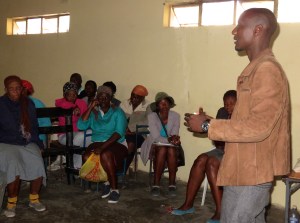
A local human rights activist speaks to village adults in Chanoga, Botswana about human trafficking in rural areas


Prioritizing Youth Leadership in Memorialization

When American youth engage with the Holocaust for the first time, their reactions tend to follow a pattern:

  1. Blurt out any and all stereotypes of Jewish culture and identity: “My dad told me that Jews control the economy and caused the recession… is that true?”
  2. Look bored when the Treaty of Versailles comes up.
  3. Grow concerned about Nazi propaganda: “Do kids still play the Juden Raus [Jews Out] board game in Germany?”
  4. Retreat into silence upon viewing video documentation of the Warsaw ghetto.
  5. Recoil at the horrific stories of child victims.
  6. Make connections: “Didn’t something similar happen in Darfur?”
  7. Plan action: “What can we do about genocide? How can we make a difference?”

As the above true-life scenario shows, youth—in the United States and beyond—are unique and powerful participants in the process of memorialization, or the preservation of memories pertaining to mass atrocities like genocide. Their honesty enables them to break down stereotypes and ask tough questions. They tend to engage with and express raw emotion more easily. Most importantly, their energy and idealism open the door for action.

Around the world, young people lead both community-based and national initiatives to honor memory of conflict and promote reconciliation. Frustrated by the ongoing delays on formal transitional justice mechanisms, youth leaders in Cote d’Ivoire formed the Justice and Peace Action Network (le réseau Action justice et paix) to document young Ivorians’ experiences during the country’s 2010 elections crisis through a series of radio broadcasts. In Cambodia, the civil society organization Youth for Peace convenes peace conferences and community dialogues for young people to engage with the memory of the genocide perpetrated by the Khmer Rouge. Back in the United States, young activists are prominent leaders of the movement to confront the legacy of racial violence and initiate the crucial process of reconciliation.

ICTJ-CDI-TJ-Youth-3-img2014
The Justice and Peace Action Network celebrates the release of its radio report, October 2014 Source:International Center for Transitional Justice

Yet we need more of the electrifying leadership of youth in memorialization work. Young people are often seen as the leaders of the future, not the present. They’re relegated to the position of passive actors in the narratives that dominate their lives. Not only are we denied their voices, but their organizing prowess, their creativity, and their rousing energy as well. Moreover, society loses out on young leaders’ unique power to reach out to their peers and heal wounds that are generations-deep. Divisions endure, and conflicts are reborn.

When youth spearhead reconciliation efforts, they send a powerful message about social and political renewal. They devise innovative peacebuilding initiatives and help break cycles of violence. In order for memorialization work to succeed, youth-led projects need to be a priority.

6 Tips for Engaging Traditional Leaders in Building Peace

If you’re working on a peacebuilding project at the local level, chances are that you’re going to work with a traditional leader.

Contrary to the notion that traditional leaders harken from bygone eras, traditional leaders are integral to a functioning society in many parts of the world. They show up in different forms, from chiefs and elders to princes and queens, wielding power—a nexus of political, social, and economic authority—that often predates the modern nation-state (hence the “traditional” part). These customary rulers not only exercise a blend of legislative, executive, and judicial faculty, but they also provide social guidance on issues like marriage, family disputes, and local economic enterprises.

Given the incredible influence they wield over local communities, especially in rural areas, traditional leaders are often the hallmark of successful community peacebuilding and development projects (Ghana is a great example). However, peacebuilders coming from societies with little or no presence of traditional authority can sometimes struggle to understand and work with customary leaders. To help out, I compiled this handy guide with my friend and project partner Kgosi (Chief) Prinsloo Shashe to ease the process along!

1. Know the Culture– Before you walk into your first meeting with a traditional leader, get a run-down on the local customs and protocol. Learn greetings in the local language. Understand expectations along the lines of gender and age: do men need to remove their hats? Do youth stand in the presence of their elders?

Subconscious behavior might get you confusion at best and rejection at worst. Subtleties matter here: in western Cameroon, crossing your legs in front of an elder is considered to be disrespectful. In Afghanistan, shaking hands while wearing gloves is a no-go. Accepting a gift with your left hand in many parts of the Middle East and West Africa will not win you any friends.

Sometimes, customary leaders will dismiss a faux-pas since you’re a foreigner, but you’re still setting out with a deficit. A chief once gave me the following advice: “If a woman comes into the community hall wearing trousers, I won’t punish her or get upset. But I will take her less seriously because she’s not taking care to respect our customs.”

2. Rock Your Humility– When I ask traditional leaders to name the surefire way to forge a strong partnership with customary institutions, they all say the same thing: “Humble yourself.” It makes sense: structured hierarchy is a common characteristic of traditional leadership. If you examine local customs surrounding chiefs and elders, you will find that most of them pertain to communicating respect and deference.

Demonstrating humility is best done with a combination of verbal communication and nonverbal gestures. Tell the chief “I am so honored to sit in your audience” with a grateful tone of voice and a pleasant smile. Simultaneously communicate cross-cultural understanding and respect by adopt culturally appropriate nonverbal communication, whether it’s bowing slightly, avoiding eye contact, or kneeling in front of the elder.

No matter how you demonstrate humility, be genuine. You’re not just there to kiss someone’s feet. Remember that the person in front of you is a co-creator of change. She will play a valuable role in your project and chances are, she’s rooting for you to succeed.

3. Listen– Active listening is one of those “anytime, anywhere” skills. When engaging traditional leaders, it’s a necessity. Listen with an open heart and an open mind. Don’t interrupt, don’t presume, and don’t aggressively contradict. Of course, you will have ideas and opinions that may differ with that of the chief. But rock your humility, as per point #2, and you can enjoy a spirited, engaging conversation without stepping on any toes.

This isn’t just about manners. Chiefs and elders have valuable insight about their communities and their people. Traditional leaders are great barometers for innovation by letting you know if they think a new idea will succeed or not. They are also advantageous consultants in project design. Many traditional leaders have served their communities for a long time, and they will have a plethora of proposals for peacebuilding projects. Active listening helps draw out some brilliant ideas that may have never occurred to you.

A quick anecdote: During my time with the Cameroonian peacebuilding organization Global Conscience Initiative, I conducted arbitration and governance trainings in the rural village of Mofako Bekondo. Within the first few consultative meetings, I developed a strong rapport with the local chief. During one of our visits, he told me that he wanted to prioritize elevating women to the male-dominated Traditional Council. Over the next four months, one of my most successful projects was the Gender Equality Initiative, which developed female political participation in the village. At my going-away ceremony, the chief said to me, “Thank you so much for listening to me. That made the difference”

4. Understand the Relationship Between Visitor and Chief– In many countries, a quid pro quo relationship exists between customary leaders and visitors: if you come to my territory and show me the proper deference according to my customs, I will treat you like an honored visitor.

To enjoy the benefits of this relationship, introduce yourself to traditional authorities as soon as possible. In some places, this must be done by formally delivering a letter of introduction. In other countries, this means paying a courtesy visit to a council of elders. Either way, introducing yourself as an outsider and requesting the chief’s benedictions helps you both communicate respect and receive it. After you’ve made the appropriate overtures, the customary leader can grant you permission to work in his or her community, advocate for your project amongst influential locals, and even personally mobilize participation amongst the people.

5. Maximize Interconnectivity– Developing strong interpersonal connections with traditional leaders can be a game changer. If you are working as a foreigner in an area that has seen many expats stream through town, standing out from the crowd can be tough. Conversely, if you are the first of your kind, surmounting cultural, national, racial, and linguistic barriers may prove to be difficult.

Developing personal rapport comes down to exposing yourself as a person. Talk about your family. Ask about the local history. Make jokes. Find common interests. This all requires you to make an effort beyond official visits and project meetings, whether it’s dropping into her office for a chat or getting involved in local social functions.

6. Engage Customary Leaders as Partners, Not Just Consultants– In Botswana, it’s a well-known fact that before you begin a project, you consult the chief. But customary leaders are not the human equivalent of a rubber stamp. They have a wealth of knowledge, connections, and legitimacy that can push your project forward if you actively involve them. Moreover, they have considerable skills in organization and mobilization that can be a huge asset to your initiative.

Engaging customary leaders as partners doesn’t always happen overnight. Sometimes you need to show rather than tell, especially if you intend on involving them as project beneficiaries. Invite the chief to a training as an observer. After the training concludes, ask him, “Would you and other local leaders like to participate in the same training? Would this help you?” It takes patience to develop buy-in, but it’s always worth it.

The bottom line is that most traditional leaders care about building peace in their localities. Your projects will benefit them as well as their people. Using the correct engagement techniques will help you achieve your objectives and realize long-term impact from your initiative.

The Namibian Genocide: Three Reasons Why It’s Overlooked

Three weeks ago when Pope Francis declared Armenia to be the first genocide of the 20th century, plenty of voices clamored in response. Human rights activists and memorialization experts praised his boldness. Turkey and those with political interest in Armenian denial resisted the damning ‘genocide’ label. And Namibians, other Africans, and those who know their history tried to remind the world that the Pope was wrong.

The historical truth is that the Namibian Genocide, perpetrated by Germany in its South West Africa colony from 1904 to 1908, is the first genocide of the 20th century. During those years, Germany responded to uprisings from the Herero and Nama ethnic groups with a policy of extermination. This policy was carried out with concentration camps, shoot-on-site reprisals, forced marches into deadly inhospitable deserts, and the world’s first killing centers. At the end of Germany’s genocide campaign, 75,000 men, women, and children from the Herero and Nama ethnic groups had been systematically murdered.

The Namibian Genocide belongs to a larger narrative of atrocities perpetrated in modern history. Its horrors certainly sound familiar: women and children forced to perform grueling manual labor on a daily cup of rice; race scientists imported from the German Fatherland to perform fatal “experiments” on genocide victims; and even an extermination order to boot. But somehow, these atrocities escaped the Pope’s attention. Here are three reasons why:

1.) Colonial Amnesia– ‘Colonial amnesia’ is a serious syndrome whereby ethnic subjugation and annihilation are justified or downplayed in the pursuit of empire and ‘civilization.’ Its origins–ethnic paternalism, Christian evangelism, and biological racism–may seem out of place in mainstream Western society. But subtle strains of colonial amnesia are still present today: movies that glorify colonial battles, Columbus Day celebrations, the survival of Leopold II statues in Brussels. Even nativist perspectives in the immigration debate arise partly from ignorance of the effects of colonialism’s socioeconomic crimes.

Recognition of Namibian Genocide suffers from the fact that its atrocities occurred in the thick of the colonial era. During their time as masters of South West Africa, the Germans maintained tight control over the past, spinning stories of brave soldiers defending the Fatherland against African savagery. The extermination of the Herero and Nama peoples was nowhere to be found in their nationalist narrative.

Decades later, in the wake of the Holocaust, Germany and the global community were attempting to reconcile Nazi crimes with its national identity. But were the Holocaust’s race scientists, killing centers, and dreams of Lebensraum connected to the Namibian Genocide? No, because the Allied powers running the Nuremberg Trials couldn’t invalidate the particular racism underlying their own colonial projects. Even Raphael Lemkin, the father of genocide studies, had difficulty connecting the dots between the Namibian Genocide, colonialism, and European racism in Africa and Asia.

Criticism of Germany’s colonial area and frank discussion about the Namibian Genocide remains scarce. During the postwar years, Nazi monuments were dismantled, some of which were replaced by public works glorifying German colonialism. Unlike other countries, Germany didn’t have a postwar anticolonial intelligentsia lambasting the European empires. German recognition reached a turning point in 2004 when Federal Minister Heidemarie Wieczorek-Zeul expressed regret and sorrow over the atrocities at the genocide’s 2004 centennial commemoration. Yet the German government has deemed Zuel’s speech to be private remarks, not an official apology. To this day, motions recognizing the Namibian Genocide are routinely defeated in the Bundestag and most of the country remains under the spell of colonial amnesia.

repatriation
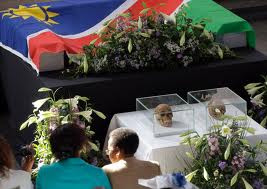
2011: The repatriation of 20 Namibian skulls that had been taken during the genocide to Germany for study by race scientists, returned without an official recognition of the 1904-08 atrocities Source:University of Geneva

2.) Minority Rule– During World War I, the Union of South Africa invaded and captured South West Africa in alliance with Great Britain. With expansionist interests close to their hearts, South African leaders internationally condemned German colonialism and exposed the atrocities committed against the Nama and the Herero. When South Africa became the administrators of the Mandate of South West Africa post-Versailles, it scrambled to rebury the genocide to make way for minority rule.

South Africa silenced history most infamously through the burning of the Blue Book, Great Britain’s damning report on the Namibian Genocide. Published in 1918, it featured sworn testimonies, excerpts from translated German documents, and damning photographic evidence of the atrocities committed. Originally an anti-Germany advocacy tool during the Great War, the Blue Book became a liability upon South Africa’s takeover of present-day Namibia. In 1926, British and South African leaders burned all available copies of the Blue Book, thus eliminating the most comprehensive account of the Namibian Genocide.

Beyond the Blue Book, South Africa created a culture of denial surrounding the events of 1904-08. It resuscitated Germany’s virulent racism during its years in control of present-day Namibia by reviving Germany’s segregation and forced labor strategies. These mechanisms especially flourished with the construction of the apartheid state following the Nationalist Party’s 1948 electoral victory. It united its Boer and German populations under a single white settler society, ensuring the survival of white supremacy ideology and the silence over the genocide until Namibian Independence in 1990.

3.) Politics of Remembrance – In spite of colonial amnesia and minority rule, memories of the Namibian Genocide have been kept alive by the extensive oral history and remembrance practices of the Herero and the Nama. Since the 1920s, Herero and Nama groups have memorialized the atrocities by commemorating battles and fallen leaders. Today, several generations after the genocide, members of both ethnic groups can recount specific names, dates, and places associated with the atrocities suffered at the hands of the German military.

Yet internal politics in Namibia have constrained these robust remembrance activities. Since the Germans targeted the Herero and the Nama separately during the genocide, each ethnic group has conducted its own commemorations independent of the other. The remembrance ceremonies have served to honor fallen leaders and the nationalistic revival of each group in addition to memorializing the atrocities. Restitution efforts and national commemorations have been divided along such ethnic lines. The litigators in the 2001 lawsuit sought restitution solely for the Herero nation, excluding the Nama as well as other central Namibian groups who suffered casualties during the genocide. Tensions also exist between the two main memorialization coordination bodies, the Nama community’s National Preparatory Committee for the Commemoration of 2004 (NPCC04) and the Herero-led Genocide Commemoration Committee, most famously emerging during the 2004 centennial commemoration.

National politics also serve as a barrier to recognition of the Namibian Genocide. The German government has resisted paying reparations to genocide victims, claiming that the foreign aid given to Namibia sufficiently covers its debt. Up until 2006, the ruling party-dominated Namibian parliament didn’t back Herero and Nama restitution efforts because the Namibian government was dependent on German foreign aid. Political rivalries between ethnic groups also played a role: the ruling party, South-West Africa People’s Organization (SWAPO), is dominated by the northern Ovambo ethnic group while Hereros lead the opposition party, National Unity Democratic Organization (NUD). Fortunately, recent years have yielded government support for genocide awareness, but global recognition of the 1904-08 atrocities require more national unity around remembrance.

commemoration
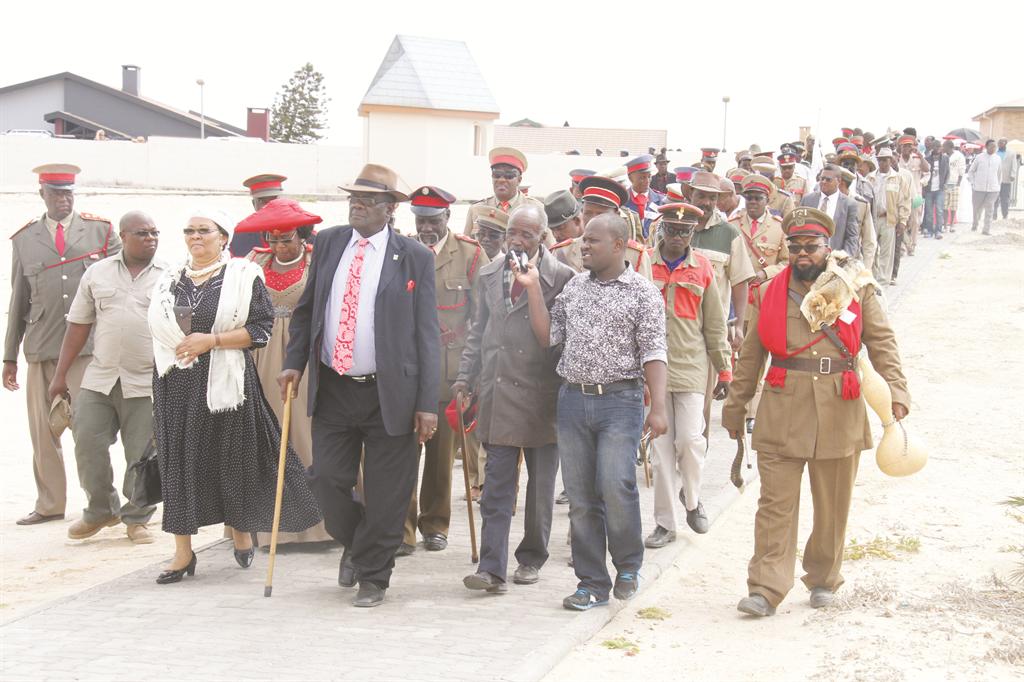
2014: Nama and Herero communities come together in Swakopmund, Namibia to commemorate the 1904-08 genocide Source:Namibian Sun

For more than a century, the historical and political barriers of colonial amnesia, minority rule, and remembrance have deemed the Namibian Genocide “forgotten.” But recent advocacy efforts from Namibians, international scholars, and leftist German politicians are turning the tide so that the next time the Pope addresses the world on genocide in the 20th century, he will include Namibia in his address.

My Career Blog, Rebooted

Hi there! For those of you who don’t know me, my name is Daniella and I’m a community peacebuilding expert currently serving as a Peace Corps Volunteer in Botswana.

For the last 5 and a half years, I have blogged about my personal and professional life at Under African Skies. But 2014 was year of deep internal change, and I decided to go on a hiatus from the blogging world last June. Retreating from the outside world proved to be successful: after a slew of personal branding exercises and intense self-introspection, I return to you with a fresh narrative of my peacebuilding work and my personal efforts on my path toward inner peace.

In the next few months, I will be settling into my new home on WordPress. I’ll migrate my old posts onto this new platform and create cool features so you can keep up with my projects. I love feedback, so feel free to let me know what’s working and what’s not!

If You Want to Start an NGO, Downgrade Your Ego

This blog post was previously published on Under African Skies

These days, doing good is hot. It’s an age where seemingly every celebrity runs a non-profit and every American youth above a certain income level goes on a “service trip.” Philanthropy has a way of exploding across our social media networks: #Hashtag activism, online petitions, and Instagrammable moments like a village using its new borehole for the first time resonate with the masses like nothing else.

But therein lies a shortcoming of globalization and its latest accomplice, social networking: we are more plugged into what’s happening around the world, but our responses seem to remain the same. One such stagnant response is that of the non-governmental organization (NGO) founded out of the sometimes-nefarious, sometimes-naive savior complex.

Don’t get me wrong: starting a civil society organization is a great way to meet the community needs left unaddressed by the government or the private sector. But, NGOs can also become tools for strengthening an individual’s ego. It starts off quite innocently: you find an issue you care about (malaria!), you find a country where it’s a problem (The Gambia!), and you start an organization to combat that scourge (Swat Away Malaria!). But, at the end of the day, you haven’t looked beyond yourself for an answer to this issue: you haven’t consulted local stakeholders, collected data, or engaged the community in collaborative solutions. In essence, your newborn organization suffers from Founder’s Syndrome: it revolves around you and your ideas, not the vision or experience of the community or its wider group of stakeholders.

Sometimes, this type of NGO survives: it catches a big-time donor, it rides on the wings of its larger-than-life celebrity founder, or it learns enough real-life lessons to sober up and transfer leadership to the grassroots. Many others don’t, and the casualties of ego-driven humanitarianism pile up.

As I’ve been learning over the last four months, the right way to start an organization demands collaboration, patience, and–above all–humility. Whether you’re a foreigner or a local, whether you’re affected by the particular issue or not, the second you start an NGO, you have to become a completely different leader. You are a conduit for the community, not a one-stop shop with a monopoly on social justice solutions. Your innovations and ideas are both constrained and spurred by the needs of affected groups. You are guided and driven by the expertise of local leaders and stakeholders.

Above of all, you consistently downgrade your ego. If you are truly serious about serving other people, you have to ask yourself every single day: “Am I making this decision or pursuing this project because it makes me feel good? Am I disagreeing with that social worker because I don’t want to be wrong? Do I really know everything in this situation?”

If you’re doing it right, you’re going to be embarrassed because someone will call you out on your inaccurate cultural assumption at a stakeholder workshop. You’re going to get burnt out from running more consultative meetings than you ever imagined possible. People will prove you wrong day after day after day. And you’ll take it all with grace and acceptance, knowing that each time your ego’s checked, you grow more capable of leading your organization and making a difference in your community

IMG_3113
District stakeholders after an anti-human trafficking sensitization workshop in February 2014 which led to the formation of the Ngamiland Anti-Human Trafficking Network

The Anti-Voluntourism Guide for Local NGOs

This blog post was previously published on Under African Skies

The White Savior Industrial Complex: a riff on colonial-era bigotry encompassing the quest for many Westerners to validate their privilege through charity, volunteerism, and liking advocacy videos on Facebook. Two years ago, it showed up on our radars in a major way through Invisible Children’s Kony 2012 campaign and the inevitable backlash that followed. Two weeks ago, it popped up again on social media feeds in the form of Rafia Zakaria’s Al Jazeera America blog post on voluntourism.

Voluntourism is quickly becoming a thing for people wanting more than the mediocrity of a vacation to an exotic locale. Basically, they travel to some lush, tropical country, spend time playing tag with orphans/digging pit latrines/building schools, visit a tourist hot spot, and return home with a collection of stories with which they dazzle their friends and co-workers. But, rather than promoting genuine cross-cultural interaction and meeting real community needs, voluntourism often only satiates the volunteers’ desire for adventure and validates their benevolence toward the innately inferior international marginalized populations.
Several people have written on how to preserve the positive aspects of voluntourism (e.g. the potential for cross-cultural understanding and exposure to human rights and development work) while simultaneously diminishing its more nefarious angle. But while other writers have addressed voluntourism and the white savior industrial complex by targeting potential volunteers, I wanted to talk instead to the host organizations themselves.
Let me say that I’m not advocating for the elimination of the voluntourism industry. Rather, I’m suggesting a few changes to the soliciting and hosting of international volunteers that could transform the phenomenon into a truly positive experience for the organization, the surrounding community, and the volunteers themselves.
First, before you begin advertising for international volunteers, conduct an internal assessment of your organization. What are your human, financial, and material needs? How can you improve your programs? Are you meeting the needs of your community? Once you determine the gaps in your organization, you can map a way forward to addressing those requirements.
Next, look at the requisite human resources for you to move forward. Do you need to create short or long term positions? Do you need a technical expert or a specialist? Unskilled labor? Depending on your human resource gaps, you have a toolbox of options from which you can choose. But, due to the funding constraints experienced by most local organizations, you’ll probably want to go the volunteer route.
Now, the word “volunteer” is not synonymous with “international volunteer.” Before you seek foreign volunteers, look first to your own community. Are there skilled men, women, or youth willing to lend a hand at your organization? Alternatively, are there domestic volunteer organizations to whom you can appeal? (Here in Botswana, Tirelo ya Sechaba, or the National Service, has been recently rebooted and is placing volunteers in government and non-government offices around the country.) If either exist, get them onboard. Not only will you meet your own needs, but you will also encourage volunteerism and ownership within your community.

If you cannot enlist the local community as volunteers, it’s time to look beyond borders. But, instead of launching an open call for anybody willing and ready, be specific about what you need and how long you need it for. Remember: international volunteers are not a sustainable solution in and of themselves. You should focus on their role as capacity-builders; as such, they should be solicited and engaged on the basis of specific criteria. (It’s worth noting that some volunteer placement businesses aren’t very stringent with their application process, so you might need to screen volunteers yourself.)

While you’re hosting international volunteers, make sure there is a clear agreement upon roles, responsibilities, and expectations. These international volunteers aren’t staff members, but, if you did your prep work correctly, they will have come to you to fill specific human resource gaps. Manage their work output while respecting the spirit of their volunteerism.

Also, prioritize your volunteer’s integration into the community and the organization, regardless of the duration of their stay. Introduce them to community stakeholders, bring them to local events, and involve them in office functions. Socialize with them outside of the office, especially with other community members. Educate them on local culture, including language, history, and common customs. The result of all this integration? The volunteers will be less likely to view themselves as saviors of the international underprivileged. Instead, their self-image will be that of a colleague, a community member, and a friend.

Finally, plan your organization’s exit strategy from the land of International Volunteerism. These individuals are short-term solutions for long-term problems. If you still need the same human resources after several rounds of international volunteers, investigate funding for permanent staff members.

Yes, these suggestions require a lot of work and advance planning. But, haphazard interventions have no place in international development. If you don’t mindfully enlist the help of international volunteers, you might be responsible for a host of problems, from nourishing the white industrial savior complex to failing to meet your organization and community needs. On the other hand, exhaustive preparation and implementation of a coherent international volunteer strategy will undoubtedly benefit your organization, community, and volunteers.

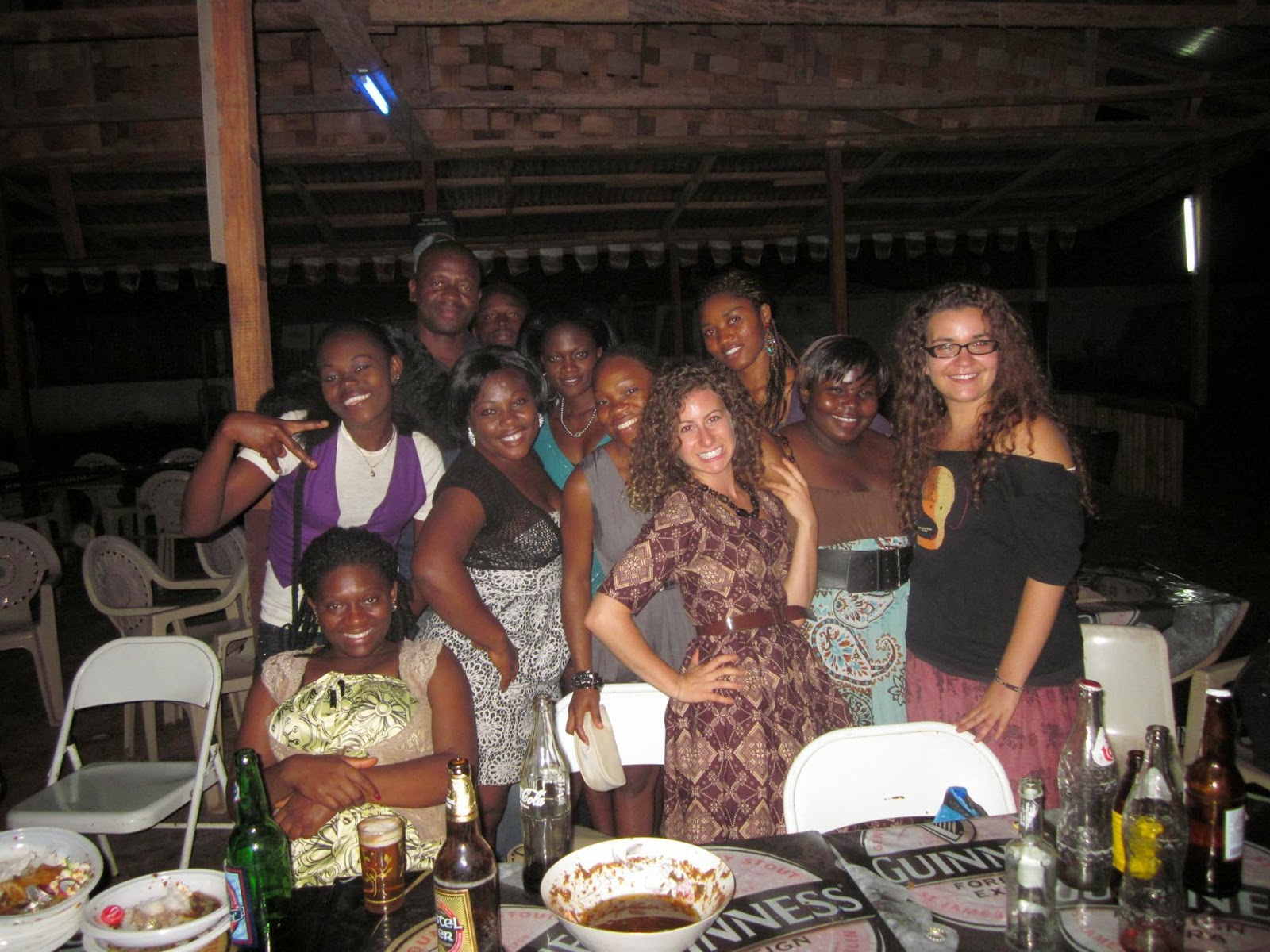
Cameroon, September 2011: I worked as an international field worker with the grassroots peacebuilding organization Global Conscience Initiative. Here, I'm at a going-away party for the organization's national volunteers.
Cameroon, September 2011: I worked as an international field worker with the grassroots peacebuilding organization Global Conscience Initiative. Here, I’m at a going-away party for the organization’s national volunteers.