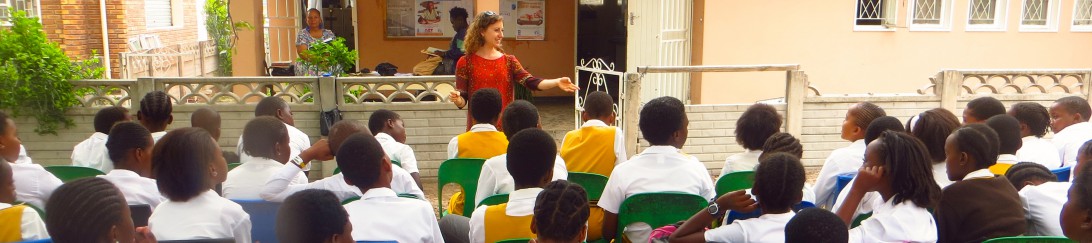
“Movements are about moments,” said Esta Soler, one the pioneers in America’s fight against gender-based violence, during a TED talk in December 2013.
Indeed, they are. These moments can be famous and extensively publicized, like Martin Luther King Jr.’s “I Have a Dream” speech. They can be quiet moments of individual triumph, like Leymah Gbowee’s transformation from domestic abuse victim to international peace activist. They can be moments of happiness, like Nelson Mandela’s release from prison, or moments of sadness, like Anne Frank’s death at Bergen Belsen.
Movements are built on moments because at the heart of our human rights crusades and peace campaigns are individual human beings. In order for us to transform society, we have to transform each man and woman.
One of my “moments” came last week. I helping facilitate at a training run by the Southern Africa Regional Environmental Program (SAREP) for the local Okavango Artists’ Association’s Adopt-a-School Mural Campaign. The campaign is an initiative to paint twelve HIV and AIDS-related murals in schools across the region and use these murals as tools for community dialogues and interventions.
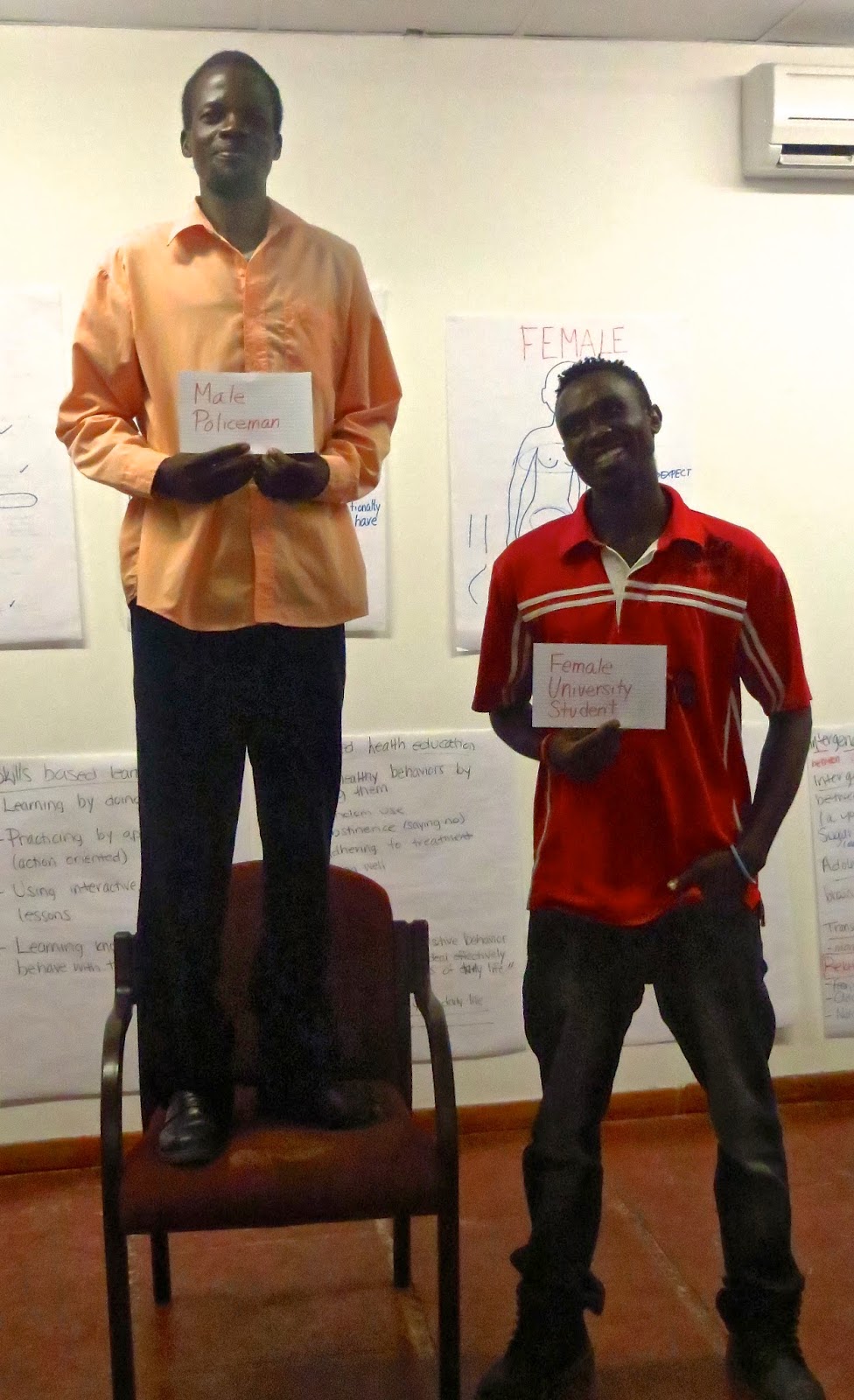
On Day Two of the training, I led a session on gender-based violence. Instead of giving a dry Power Point presentation, I created a dynamic mini-training featuring components such as Drawing the Difference: Gender vs. Sex and The STEP UP Gender Roles and Power Game. These components were immediately effective. As I led the group through the inequalities of traditional gender roles and their power dynamics, several of the participants responded to the messaging with bright eyes and forthcoming anecdotes. “Aha” moments were happening all around me as they connected gender to power to violence to HIV and AIDS.
 |
|
The STEP UP Gender Roles and Power Game |
The next day, I followed up my presentation by screening a STEPS film to the participants, a group almost entirely made up of men. The film tied in nicely with my previous session since it featured Kennedy, a new father challenging traditional Tswana gender roles by being a hands-on dad (e.g. sitting with the mother while she was in labor, changing diapers, feeding the infant).
After the film had finished, the men in the room were in a daze, smiling tenderly down at their papers. Mr. Ntema, one of the artists in the room, was visibly moved to the point where I saw him brush a tear out of his eye.
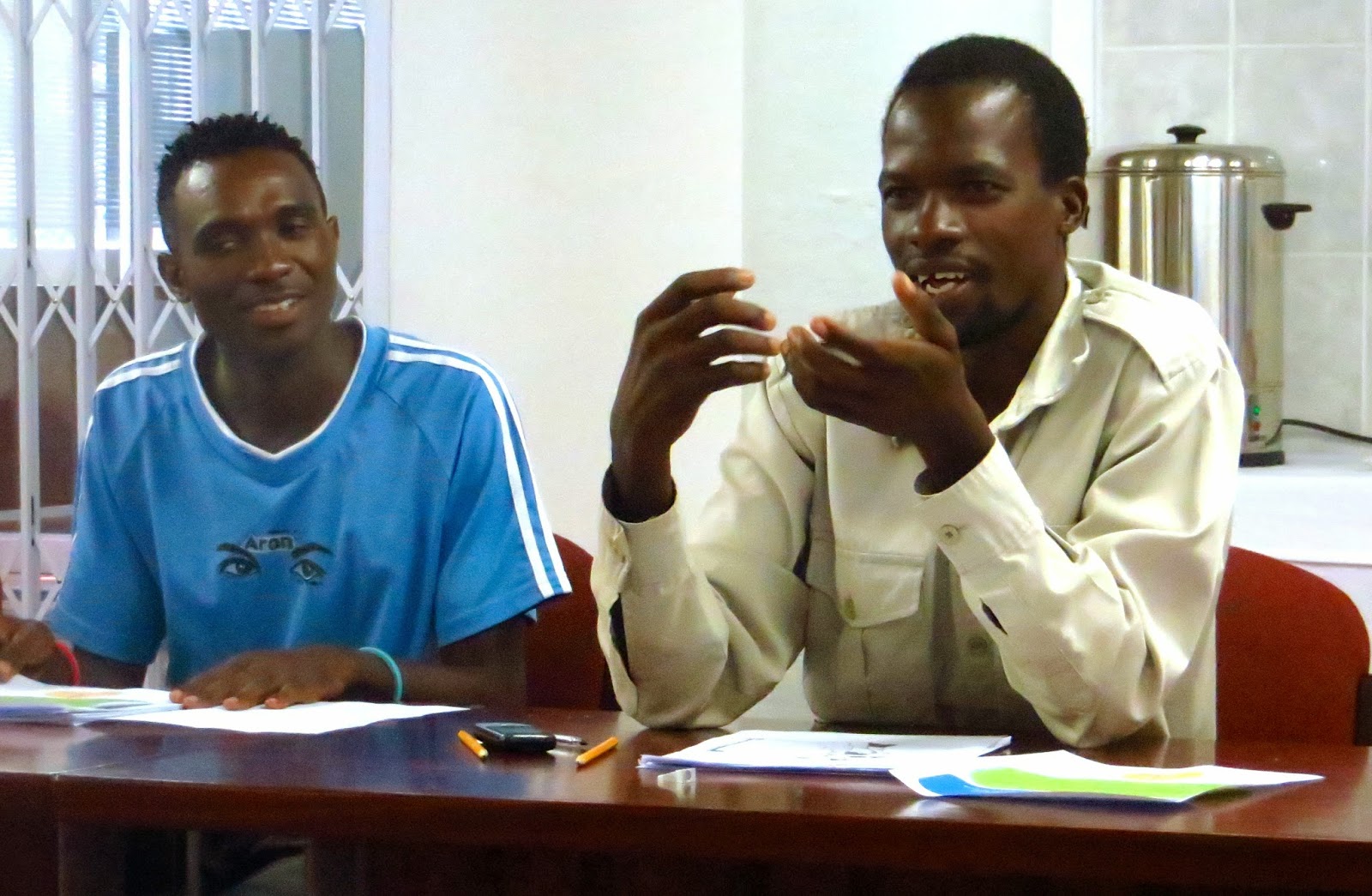
As we started the post-film discussion, I saw just how deep that emotional connection went. Mr. Ntema was the most verbose: he passionately expressed how the film reminded him of the year when he replaced his daughter’s mother as her sole caregiver. He talked with pride and overwhelming love about how much he enjoyed raising her. Another artist, Aaron, responded more quietly, but he also expressed gratitude for the film for showing him that he can be a hands-on father.
 |
|
(L to R) Aaron and Mr. Mothaki during the post-film discussion |
After the artists shared their initial reactions, the discussion cycled back to the material covered the day before. “This is how we change gender roles,” they observed. “This is how we stop gender-based violence.” Right there in that air-conditioned conference room, they connected the training material and Kennedy’s example from the film to their own lives. That was a moment of transformation for each man in the room.
Meanwhile, in her 2013 TED talk, Esta Soler went on to say that, “Men want to be invited, not indicted.” Across the board and around the world, this remains true. If we vilify men in our activism around issues like gender-based violence, we exclude half of the population from forging solutions in our communities. Our brothers, fathers, boyfriends, and sons are our allies. The more moments of transformation we experience together, the more our movement grows.
 Daniella Montemarano